




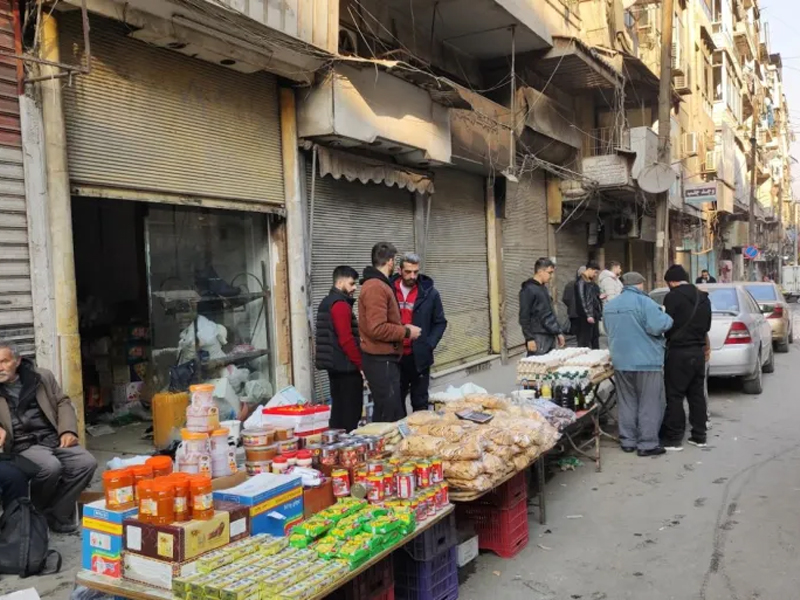
With the post liberation phase the Syrian economy faces a major challenge in restoring activity and building sustainable growth foundations In this context the role of Syrian expatriates emerges with the capital experience and economic networks they possess The map of Syrian presence in neighboring countries shows that exile has moved beyond humanitarian refuge over the past years into a broad economic and human presence which varies by country but shares the feature of being a resource that can be leveraged in the stage of rebuilding the Syrian economy
Syrians in exile map of distribution and economic role
Turkey the largest bloc and human and economic capital
About 237 million Syrians reside in Turkey demographic data indicates that nearly half are within the productive age group 18 64 reflecting a clear weight in the labor market In terms of education Syria tops the list of countries sending students to Turkish universities Turkey hosts more than 60 thousand Syrian students representing more than 18 percent of all international students in addition to about 17 thousand Syrian graduates from Turkish universities which accumulates highly qualified human capital
Economically during 2010 2023 Syrians contributed to founding 10332 companies with capital of nearly 632 million according to data from the Turkish Union of Chambers and Commodity Exchanges Other studies estimate Syrian investments in Turkey at about 10 billion dollars focused on small and medium projects especially in trade restaurants services and light manufacturing
These investments helped provide about 500 thousand jobs with a clear presence of Syrians in textiles ready made clothing construction agriculture logistics and food industries especially in southern Turkey making them an economic actor not just a refugee case
Lebanon population density and parallel economy
In Lebanon there is one of the densest Syrian communities in the world Estimates by local authorities indicate about 112 million Syrians since December 2024 including unregistered individuals compared to about 636 thousand officially registered refugees with the UN by the end of September 2025
This population weight directly impacted the labor market studies estimate that the number of Syrian workers exceeds one million across various sectors mainly agriculture construction and services often within the informal economy Despite lack of precise data on Syrian companies Syrian investments in Lebanon are estimated at about 26 billion dollars reflecting a large economic volume even if operating in an unorganized environment
Egypt investment and entrepreneurship model
About 1.5 million Syrians live in Egypt according to IOM estimates Their presence is characterized by clear investment activity Data from the General Authority for Investment and Free Zones shows that Syrian owned companies represent 21.3 percent of all foreign companies established in the country until June 2025 through founding 16323 companies
Syrian investments are estimated at about 23 billion dollars focused on trade food industries services and restaurants making the Syrian community one of the most prominent components of active foreign investment in the Egyptian economy over the past decade
Jordan active community in production and employment
About 1.3 million Syrians live in Jordan since 2011 including 557783 registered with the UNHCR until March 2025 according to the Social Protection Observatory of Tamkeen Syrians have emerged as investors and entrepreneurs Syrian investments in Jordan are estimated at about 25 billion dollars distributed across various sectors
Company registry data indicates more than 4100 registered Syrian companies operating in industry trade and services reflecting economic integration beyond mere labor
Iraq regional base for reviving Syrian trade
In Iraq especially in Kurdistan over 300 thousand Syrian refugees reside according to UNHCR data Their economic activity focuses on labor trade and small projects especially in services restaurants construction and cross border trade The importance of this presence lies in geographic proximity and its potential role in reviving land trade and regional economic integration with Syria in the post liberation phase
This map reveals that Syrians in neighboring countries have accumulated diverse human and economic capital from labor and field experience to investment and entrepreneurship making Syrian exile a real base that can be leveraged to stimulate the Syrian economy and reintegrate it regionally in the coming phase